The Children Speak for Themselves
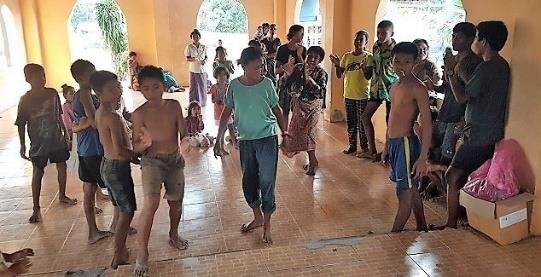
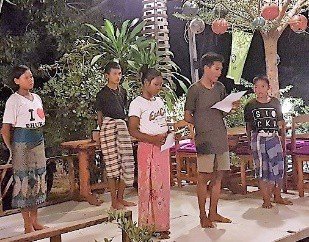
A local restaurant, the Peacock Tree, offered to hold a fundraiser for the Moken children, and with only a week to prepare Wud and Jieab greeted the guests in English and told the Moken story clearly and movingly, before the group danced. Around the same time, at the island's cashew-nut festival, Ieang played the lead in a dance honouring the late king, holding the king's portrait — and, after years of coaxing, Philip entered the first-ever Moken football team. They lost their first match 4-0 and their second 2-0, but came off the field determined to practise for next year.
At the request of Ajaan Siaan, they also began travelling once a month to Koh Chang to help sustain that island's small congregation, whose usual supporters were no longer well enough to go. The arrangement is deliberate: the local church does everything itself, and the Moken children come to serve with song and prayer. Quietly, a threshold was turning — the discipled beginning to disciple.
The academic results overturned the government school's verdict. Wud finished his maths level at 98%; across the education centre the lowest maths mark was 92%, reading 89%, and writing 76% — this after a government teacher had declared that some of these children would never read or write. And after two and a half years, the citizenship process finally moved: of the ten families who applied, four were accepted. A long, drawn-out story, Philip wrote, "but there is hope."
Photo Gallery